

Courses and workshops for the people who manage practices.
Our courses cover four areas of practice management. Each one is taught with the day-to-day reality of a small practice in mind, so you can apply what you learn in your own business.



Practice Management & Operations
Running a practice brings a steady stream of administrative and operational responsibilities. Many of them come with regulatory and compliance requirements. This area covers how to manage them properly.
You will learn about- The daily administrative and operational responsibilities of a practice
- Processes, workflows and management controls
- Your regulatory and compliance responsibilities
- Documentation, recordkeeping and internal controls





Accounts, Billing & Financial Management
You don’t need to become an accountant. You do need to understand your numbers. This area makes financial information clear and useful, even if you have no financial background.
You will learn about- Income, expenses and profitability
- Cash flow and budgets
- Reading your financial reports
- Billing, outstanding accounts and payment collections
- Reconciliations and the financial controls every practice needs






Having a system is only half of it.
The information has to be entered accurately and consistently or the reports won’t mean much. This area is not about selling a particular software product. It is about understanding why reliable records matter.
Records & Digital Systems
Many small practices still run their appointments from a paper diary, a spreadsheet or a set of disconnected processes. That works for basic admin but makes it hard to see what is really happening in the business.
A digital booking and practice management system is more than an electronic diary. Used properly, it can show you:
- How many appointments are booked, completed or cancelled
- How much appointment time is available compared with how much is used
- Which days or times are consistently busy or quiet
- How booking patterns change over time
- How appointment activity relates to revenue
- Where time and income are being lost


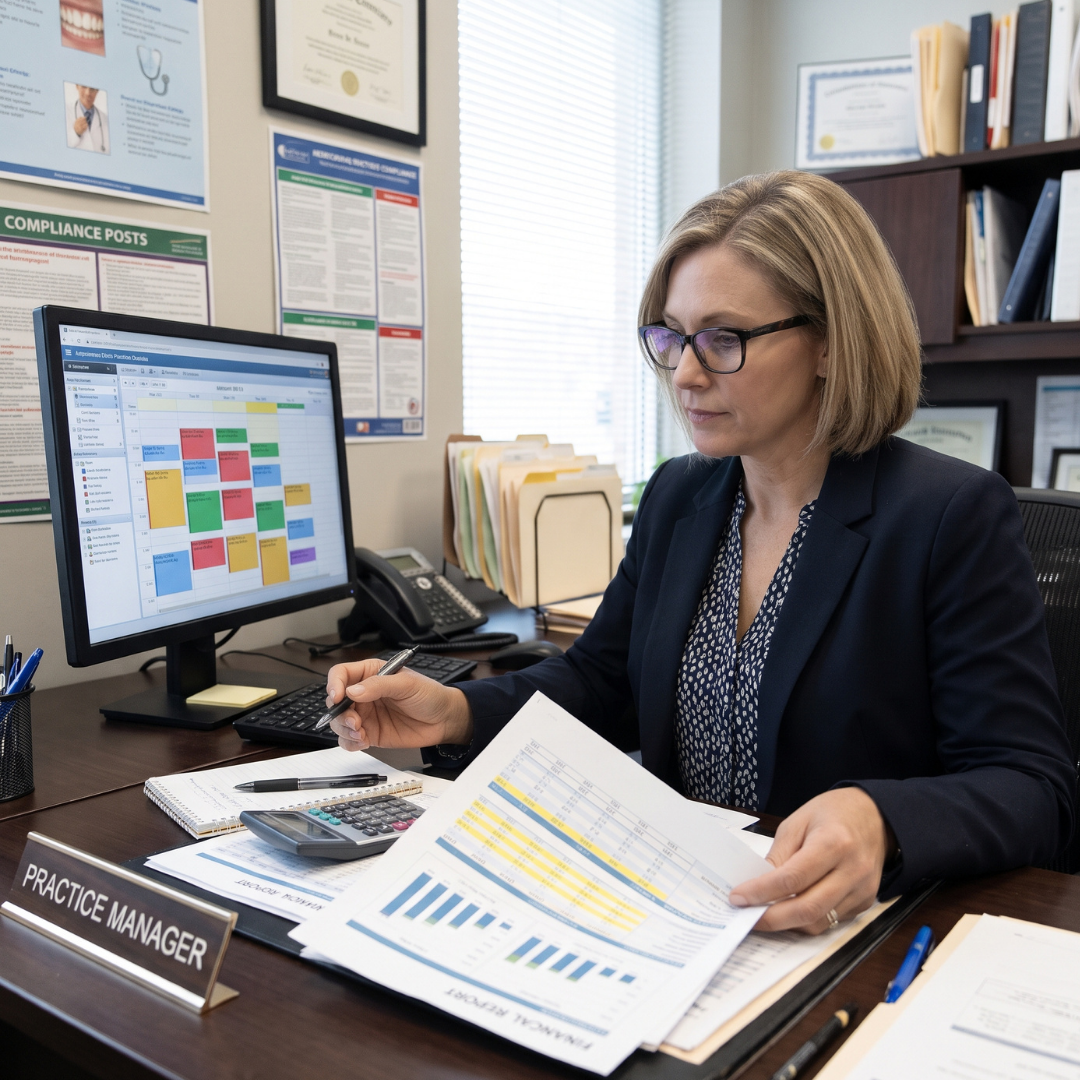

The aim is to move from recording what happened to deciding what to do next.
Business Intelligence: Learning From Your Data
Once your systems hold reliable information, you can start using it. This area shows you how to combine your financial figures with your booking and operational data to understand how your practice is performing.
This area covers- Keeping reliable information in your systems
- Combining financial figures with booking and operational data
- Understanding how your practice is performing
- Using your data to decide what to do next